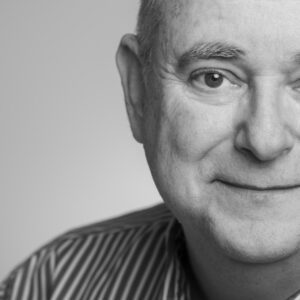
Lee Hopkins: Pioneering the fusion of AI and creativity
G’day! I’m Lee Hopkins, and I’m thrilled to welcome you to my digital stomping ground where artificial intelligence and creativity collide in the most spectacular ways. Imagine a world where algorithms dance with imagination, and machine learning waltzes with human ingenuity. That’s the world I live in, and I’m here to invite you along for the ride.
Now, you might be wondering, “What’s a bloke like Lee doing in the realm of AI and creativity?” Well, pull up a chair, grab your favourite drink, and let me tell you how I found myself at the forefront of this digital revolution.
My journey began with a simple fascination: how could cutting-edge technology enhance the way we communicate and create? In 2004, it was Social Media that excited me, and I was at the forefront of it, helping businesses around the world understand and use Social Media to generate real ROI.
In 2024, I had an epiphany of the type and size that I had in 2004, only this time around AI in the business and creative industries. It was again a sort of lightbulb moment, but instead of a lightbulb, picture a whole network of AI-powered smart lights, each one illuminating a new possibility.
With a background that’s a bit of a mixed bag—think business communication expert meets tech enthusiast, and with a healthy dose of creativity added in—I found myself uniquely positioned to bridge the gap between the ones and zeros of AI and the boundless realm of human creativity. It’s like being a translator between two worlds, helping each side understand and amplify the other.
My mission? To help businesses and creative souls harness the power of AI to push the boundaries of what’s possible. Think of me as your friendly neighbourhood AI whisperer, here to demystify the tech and show you how it can supercharge your creative endeavours.
One of my favourite playgrounds is the world of AI-driven communication strategies. Imagine having a crystal ball that could tell you exactly what your audience wants to hear, when they want to hear it, and how they want it delivered. That’s what AI can do for your communication efforts. It’s like having a team of mind-reading marketing gurus working around the clock.
For instance, I’ve helped businesses use AI-powered social media tools to crack the code of audience engagement. We’re talking about pinpointing the perfect time to post that witty tweet or identifying the type of content that’ll have your followers hitting the share button faster than you can say “viral”. It’s not about replacing the human touch in communication; it’s about amplifying it with data-driven insights.
But my passion doesn’t stop at communication. I’m like a kid in a candy store when it comes to exploring AI’s applications in creativity and innovation. I’ve had the privilege of working with a colourful cast of creatives—artists, writers, musicians, designers—helping us all integrate AI into their and my processes in ways that’ll make your head spin (in a good way, of course).
Picture this: a musician using AI to generate original compositions tailored to specific moods. It’s like having a tireless collaborator who’s listened to every piece of music ever created and can spit out new melodies faster than you can say “Grammy Award”. Or how about visual artists using AI to create mind-bending artworks that blend traditional techniques with algorithmic innovation? It’s like having Salvador Dali and Alan Turing as your personal art tutors.
Now, I know what some of you might be thinking. “But Lee, isn’t AI going to replace human creativity?” Not on my watch, sunshine! I’m a firm believer that AI is here to enhance human creativity, not replace it. It’s like giving Michelangelo a power tool—it doesn’t make him any less of an artist; it just allows him to bring his vision to life in new and exciting ways.
Of course, with great power comes great responsibility. That’s why I’m a staunch advocate for the ethical use of AI. We need to approach this technology with the same care and consideration we’d give to any powerful tool. It’s about finding that sweet spot between leveraging AI’s capabilities and preserving the human touch that makes creativity, well, creative.
When I’m not knee-deep in AI projects, you’ll often find me on stages or in virtual workshops, spreading the good word about AI’s potential. Think of it as a TED talk, but with more jokes and a distinctly Aussie irreverance and delight in taking aim at the ‘sacred cows’. My goal is to inspire and empower folks to embrace AI as a valuable tool for innovation and growth. After all, knowledge is power, and I’m here to help you plug into that power source.
As we hurtle towards an AI-powered future, I’m committed to staying on the cutting edge, always exploring new ways to integrate this technology into creative and communication strategies. It’s like being on a never-ending rollercoaster ride of innovation, and let me tell you, the view from up here is spectacular.
So, whether you’re a business looking to revolutionise your communication strategy, an artist seeking to push the boundaries of your craft, or simply someone curious about the intersection of AI and creativity, you’ve come to the right place. Together, we’ll navigate this brave new world of AI-enhanced creativity, unlocking possibilities you never even knew existed.
Remember, in this world of AI and creativity, the only limit is our imagination – and with AI by our side, even that limit is being pushed further than ever before. So, are you ready to embark on this thrilling journey into the future of creativity? Buckle up, because with AI in the mix, it’s going to be one heck of a ride!
Welcome aboard, and let’s create something extraordinary together!

Academic credentials (for those who care about such things)
My research on psychological contracts in organisational psychology has gathered 450+ citations over the past 25+ years. The main paper—co-authored with Lynne Millward at the University of Surrey—explored how temporary employment contracts reshape the psychological relationship between workers and organisations.
For context: most academic papers never break 10 citations. Many gather zero. Getting into the hundreds means the work contributed something that other researchers found useful enough to build on.
450 citations won’t get you a Nobel Prize, but it’s solid evidence that the research mattered to people studying organisational behaviour, commitment, and the changing nature of work.
Here’s what’s more interesting than the number itself: the paper was published in 1998, and researchers are still citing it in 2025. That’s unusual. Most papers get cited heavily for a few years, then fade. This one keeps getting referenced because the questions it asked—about what happens to loyalty and commitment when organisations stop promising security—turned out to be increasingly relevant as the employment landscape shifted.
The work explored whether people on temporary contracts form different psychological relationships with their employers than permanent workers do. Turns out they do. Temporary workers tend towards transactional thinking—”I’ll do the work, you’ll pay me”—rather than relational thinking—”we’re in this together long-term.”
That finding holds up across industries and countries, which is why people keep citing it.
I moved on from academic research decades ago. These days I write books, counsel people, and explore what happens when you change your environment rather than endlessly optimising yourself. But the citations remain, evidence that questioning conventional assumptions about work and commitment struck a chord with people studying those same questions.
Millward, L. J., & Hopkins, L. J. (1998). Psychological Contracts, Organizational and Job Commitment. Journal of Applied Social Psychology, 28, 1530-1556
Millward, L.J., & Hopkins, L.J. (1998). Organizational Commitment and the Psychological Contract. Journal of Social and Applied Psychology. 28(16) 16-31
Millward, L.J. & Hopkins, L.J. (1997). A psychological contract and identification model of risk ownership. International Journal of Project and Business Risk Management. July, 111-120
Hopkins, L.J., & Millward, L.J. (1997). Measuring Information Performance. Invited paper presented at the Maximising Information Performance (Euromapping) Conference, June 2-3rd, 1997, London
Millward, L.J., & Hopkins, L.J. (1997). Organisational Commitment and the Psychological Contract. Paper presented at the British Psychological Society Annual Conference at The Edinburgh Conference Centre, April 1997
Hopkins, L.J., & Millward, L.J. (1997). Perceptions of the employment contract: core and peripheral workers. Paper presented at the British Psychological Society Annual Conference at The Edinburgh Conference Centre, April 1997
Millward, L.J., & Hopkins, L.J. (1996) Organisational Change and the psychological contract. Interactive poster presentation at the XXVI International Congress in Psychology, Montreal, August 16-21, 1996
Hopkins, L.J. (2008) 3D virtual environments: businesses are ready but are our ‘digital natives’ prepared for the changing landscape? Proceedings of the 25th Annual ASCILITE Conference, Melbourne, Victoria.
- B.Sc. (Hons) Applied Psychology & Sociology, University of Surrey, UK, specialising in Social Psychology;
- Diploma of Management Studies, Brunel University, UK;
- Masters of Counselling Practice, Tabor College, Adelaide, South Australia, specialising in CBT, ACT, Grief & Loss, and help for military veterans re-entering civilian life;
- Master of Creative Writing & Communication, Tabor College, Adelaide, South Australia (in final year).
My personal creativity
leehopkins.com – main website
leehopkinswriter.com - creative writing website
leehopkinsphotography.com - photography website
amzn.to/4fjsWOr – my books on Amazon
apple.co/4fhR3wL - my ambient music on iTunes
youtube.com/@LeeHopkins - my business communication videos on YouTube